Uncertain about classification?
We help you correctly classify your AI systems and derive the appropriate measures.
Free initial consultationScope & Applicability
The 4 Risk Classes of the AI Act
Simply Explained
The EU AI Act is based on a risk-based approach. The higher the risk of an AI system, the stricter the requirements. Understand the logic behind the four levels.
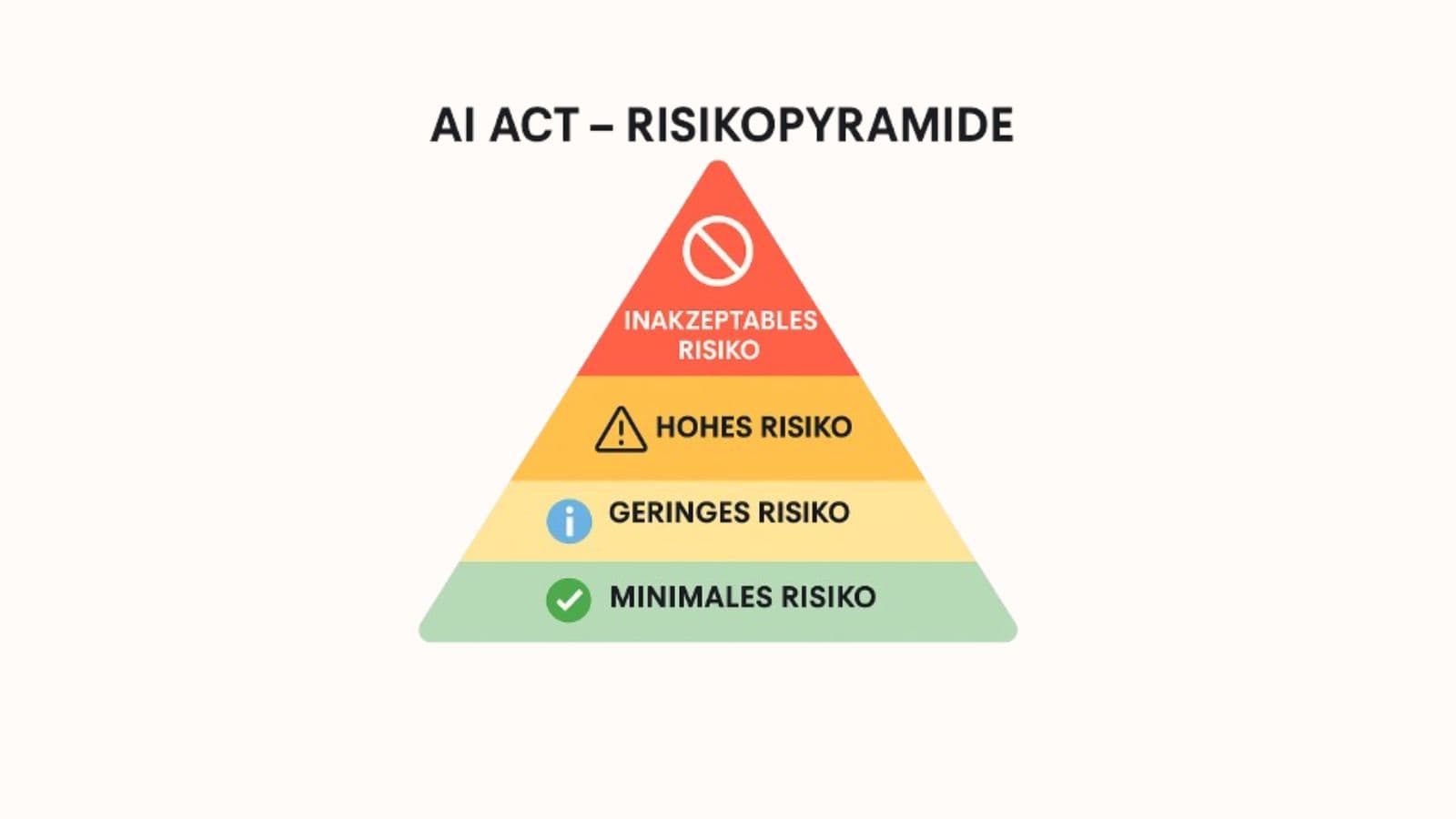
The Risk-Based Approach of the AI Act
The EU has opted for a risk-based regulatory approach. This means: Not all AI systems are treated equally. Obligations are based on the potential harm a system can cause.
This approach is intended to enable innovation where risks are low, while protecting people from dangerous AI.
Unacceptable Risk (Prohibited)
These AI systems are fundamentally prohibited
Examples: Social scoring by authorities, emotion recognition in workplace/schools, real-time remote biometric identification in public spaces (with exceptions), manipulative techniques
Consequences: Use and placing on the market are prohibited. Violations can be punished with fines up to EUR 35 million or 7% of global annual turnover.
High Risk
Strict requirements for sensitive application areas
Examples: AI in medical devices, biometric identification, critical infrastructure, education & vocational training, employment & HR management, access to essential services, law enforcement, migration & asylum, justice & democratic processes
Consequences: Comprehensive obligations: risk management, data quality, technical documentation, transparency, human oversight, accuracy & robustness, conformity assessment before placing on market.
Limited Risk
Transparency obligations for certain AI systems
Examples: Chatbots, AI-generated content (deepfakes), emotion recognition systems (if not prohibited)
Consequences: Users must be informed that they are interacting with an AI or that content is AI-generated. No further specific compliance requirements.
Minimal Risk
Free use without additional requirements
Examples: Spam filters, AI in video games, content recommendation systems
Consequences: No specific obligations under the AI Act. Development and use are subject to general legal provisions.